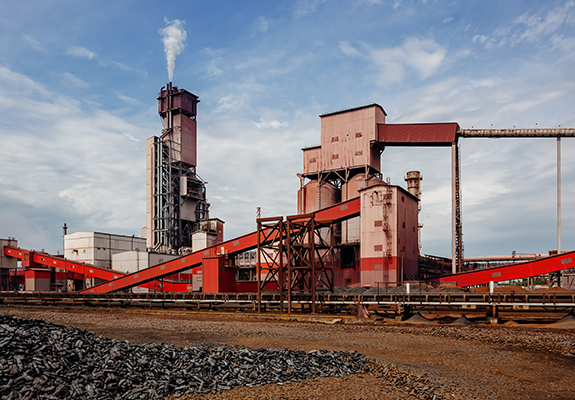
We have a broad selection of heat-resistant belts designed for demanding material-handling environments. With stocked 400°F (204°C) and 700°F (371°C) specifications available in multiple constructions, we can help you match the belt to the application, respond to replacement needs and better support customers with high-temperature requirements.
Designed for material temperatures up to 400°F (204°C) and continuous baking loads up to 300°F (149°C), our High Heat belting is built for consistent performance across a wide range of elevated-temperature applications.
Multiple ply ratings and cover gauges are available, giving you flexibility when matching belt construction to the demands of the conveyor and conveyed material.

For more extreme temperature requirements, our Peak High Heat belting is designed for material temperatures up to 700°F (371°C), with short-cycle loads in the 450°F to 500°F (232°C to 260°C) range.
These heat-resistant constructions are built for applications where standard heat-resistant belting may not provide the temperature resistance needed to maintain dependable performance.

High-temperature applications can vary considerably, which is why temperature resistance is only part of selecting the right belt. Ply rating, cover thickness, material temperature, exposure time and operating conditions can all influence the best specification for the job.
The right belt construction can help reduce the effects of repeated heat exposure. Our high-temperature options are designed to:
• Resist cracking and cover hardening
• Help protect the belt carcass from thermal degradation
• Maintain flexibility under elevated temperatures
• Support longer belt life in demanding applications
• Help reduce premature replacements and unplanned downtime
High-temperature conveyor belting is used across a variety of industries where hot materials must move reliably through production or processing. Applications can include:
• Asphalt plants
• Hot aggregate conveying
• Sand and gravel operations
• Cement and concrete production
• Foundries
• Steel and metal handling
• Recycling facilities
• Biomass and wood processing
